Health literacy video contest draws record 37 entries
Contest focuses on addressing oral health misinformation on social media
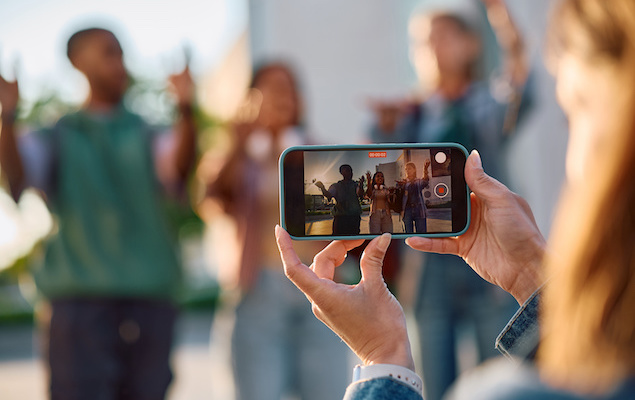
The American Dental Association’s 2026 Dental Student Health Literacy Video Contest received 37 submissions, more than three times the number received in previous years, according to the Association.
The annual contest, conducted by the ADA Council on Advocacy for Access and Prevention in collaboration with the National Oral Health Literacy Alliance, invited dental students to create short videos demonstrating oral health literacy principles. The 2026 contest was sponsored by the ADA, the alliance and the American Dental Education Association.
"I'm thrilled to see the tremendous response to this year's video contest. The enthusiasm from students reflects the importance of equipping future dentists with the necessary skills to combat oral health misinformation on social media and communicate accurate, evidence-based information in ways the public can understand and trust," said Shailee Gupta, D.D.S., chair of the National Oral Health Alliance, which is an Advisory Committee of the Council on Advocacy for Access and Prevention.
This year’s theme, “Health Literacy Through a Dental Lens: Addressing Social Media Misinformation,” asked students to address misleading messages about do-it-yourself dental care circulating on social media. The ADA provided examples of topics such as teeth whitening, extractions, veneers and clear aligners. Students were asked to explain what they would advise the public, including other health professionals, about one or more of these messages in a 60- to 90-second video.
The submission deadline was extended to Sept. 30. According to the ADA, the 37 submissions came from several dental schools, including schools in Canada and Puerto Rico.
Before developing their videos, students were directed to review the Oral Health Literacy Toolkit developed by the California Department of Public Health's Office of Oral Health and the University of California, Berkeley, which covers health literacy principles for the dental team and provides sample scripts demonstrating the teach-back technique. Students were also instructed to review science-based literature and ADA resources related to their selected topics.
Under the contest rubric, entries will be evaluated on their use of health literacy principles, the accuracy of clinical information, use of the teach-back method, and creativity and innovation.
Health literacy principles account for 40% of the score, with an emphasis on using plain language in oral and written content. Accuracy of data and case-relevant information accounts for 30%, while creativity and innovation accounts for 20% and appropriate use of the teach-back method accounts for 10%.
Judges designated by the National Oral Health Literacy Alliance will review entries after the close of the contest and select first-, second- and third-place winners. According to the rules, entries are judged on skill, resourcefulness, originality, entertainment, creativity and production quality.
According to the ADA, the judging panel will include members of the alliance, the ADA Council on Advocacy for Access and Prevention, ADEA and the National Dental Association. Winners are expected to be determined during the alliance's November meeting.
The first-place winner will receive $2,000, to be shared among team members, as well as travel to the 2027 ADEA Annual Session & Exhibition. The second-place winner will receive $1,000, and the third-place winner will receive $500. Winning entries will be shared on ADA social media channels.