
Comparing facial scanners
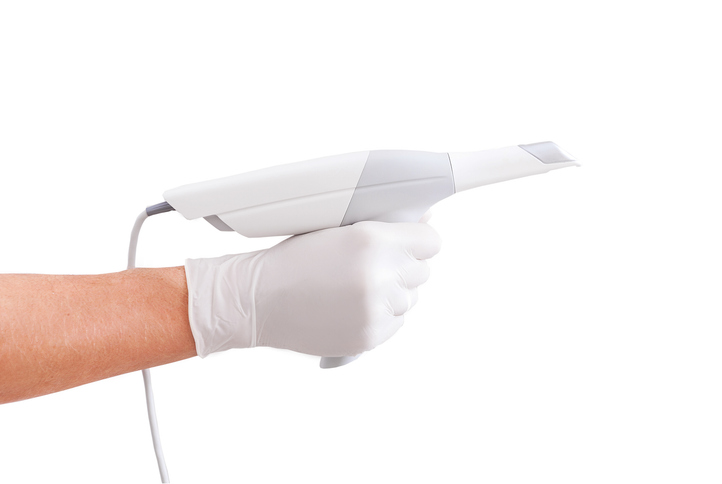
Researchers have examined the accuracy of dental 3D facial scanning technology.
In an in vitro study published in The Journal of Prosthetic Dentistry, the researchers conducted a quantitative and qualitative evaluation to compare the precision of three facial scanners — the industrial handheld scanner, stationary facial scanner and smartphone depth-sensing scanner — using a mannequin with simulated human facial features. They calculated deviations with superimposed scan data in a reverse engineering program.
The researchers found that the industrial handheld scanner offered the most precise measurements with the lowest levels of superimposition error followed by the stationary facial scanner and the smartphone depth-sensing scanner. The handheld scanner exhibited better reproducibility of the curved regions and smallest polygons, whereas the stationary and smartphone-based scanners showed greater center and peripheral deviations as well as reference point distances, respectively.
The researchers hypothesized that the handheld scanner may be capable of reducing unscannable areas; however, all three scanners fell within the clinically acceptable range for facial scanning.
Read more: The Journal of Prosthetic Dentistry
The article presented here is intended to inform you about the broader media perspective on dentistry, regardless of its alignment with the ADA's stance. It is important to note that publication of an article does not imply the ADA's endorsement, agreement, or promotion of its content.