
Chairside approach could pave way for same-day dental restorations
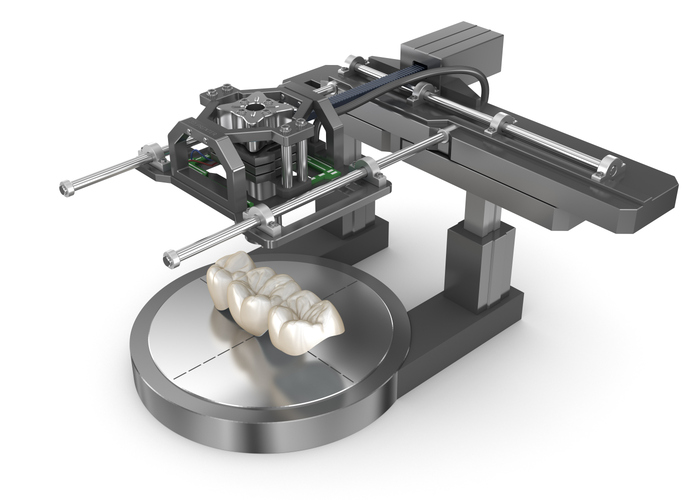
A new 3D-printing strategy could reduce the number of appointments required to receive a dental restoration.
Although patients can currently receive same-day, 3D-printed dental restorations, the ceramic resins used to create them may not be as durable as permanent zirconia restorations, according to a news article from ScienceDaily. Further, patients can receive same-day milled zirconia restorations, but milling may limit the ability to produce more complex restorative designs and increases the risk of cracking.
The new technique — which involves the development of chairside, customizable, 3D-printed, all-ceramic zirconia permanent dental restorations — may cut down the wait time on the development of dental restorations from up to four days to a single appointment. Following 3D printing, the researchers explained that the restorations undergo debinding, a gradual heating process to eliminate residual resin that served to bind the zirconia particles during the printing process, as well as sintering to fuse the zirconia particles together.
They stressed that because the removal of resin must be done slowly to avoid cracking, the typical debinding process can take between 20 and 100 hours to complete. However, publishing their new thermal debinding process in Ceramics International, the researchers described how they combined porous graphite felts and a vacuum system to allow gases released by the resin to escape and remove the gases from the area surrounding the dental restoration. The accelerated process would also maintain the structural integrity of the dental restoration, minimize energy consumption and costs, and achieve comparable properties observed in conventionally manufactured dental restorations.
The researchers noted that they are working to apply their novel strategy across permanent dental restorations — including crowns, bridges and veneers — in order to provide a more personalized and efficient approach to treatment. The next steps would involve testing in clinical environments and regulatory approval prior to widespread adoption.
Read more: ScienceDaily
The article presented here is intended to inform you about the broader media perspective on dentistry, regardless of its alignment with the ADA's stance. It is important to note that publication of an article does not imply the ADA's endorsement, agreement, or promotion of its content.