From Access to Success: A New Philosophy in Coronal Preflaring for Complex Cases

Coronal preflaring with an orifice opener is often recommended when treating molars with constricted pulp chambers, significant coronal calcification, difficult straight-line access, or when larger shaping files may be impeded by coronal interferences. By enlarging the coronal portion of the canal, clinicians can improve access, facilitate canal negotiation, and reduce stress on subsequent instruments.
When selecting an orifice opener, canal anatomy should guide instrument choice. In straight, wide canals, larger tip sizes (ISO 20 or 25) combined with greater tapers (.08–.12) are generally effective. However, canals with pronounced coronal or middle-third curvatures, calcifications, or thin cervical dentin require a more conservative approach. Traditional orifice openers are inherently rigid due to their dimensions and can increase the risk of procedural errors such as transportation, ledging, or excessive dentin removal when used in complex anatomy.
To address these challenges, manufacturers have increasingly incorporated proprietary heat treatments into nickel-titanium (NiTi) instruments to improve flexibility and fatigue resistance. Even so, most clinicians continue to establish a manual glide path before introducing rotary instruments to minimize the risk of iatrogenic complications.
A recently introduced innovation seeks to expand the capabilities of coronal preflaring in challenging cases. The EdgeOnyx™ Orifice Opener (EdgeEndo) features a unique ISO 09 tip size combined with a constant .09 taper (09/.09). This design allows the instrument to conservatively enter narrow canal spaces, navigate mild curvatures, and facilitate coronal enlargement before deeper canal negotiation. In many cases, it can simplify access to calcified canals, MB2 canals, and anatomies where traditional orifice openers may be too aggressive.
One concern with such a small tip size is whether the instrument can maintain adequate strength and durability. However, recent research demonstrated that the 09/.09 orifice opener exhibited excellent mechanical performance, including enhanced flexibility and cyclic fatigue resistance compared with more traditional designs, while maintaining comparable torsional strength (Bago et al., 2026). The improved flexibility is attributed to the smaller apical dimensions, while torsional resistance is maintained through the increased metal mass provided by the larger taper in the coronal and middle portions of the instrument.
In addition to its mechanical advantages, previous studies have demonstrated excellent manufacturing precision and dimensional accuracy despite the combination of a very small tip size and heat-treated NiTi construction (Figure 1). These characteristics allow the instrument to conservatively enlarge the coronal and middle thirds while preserving canal anatomy.
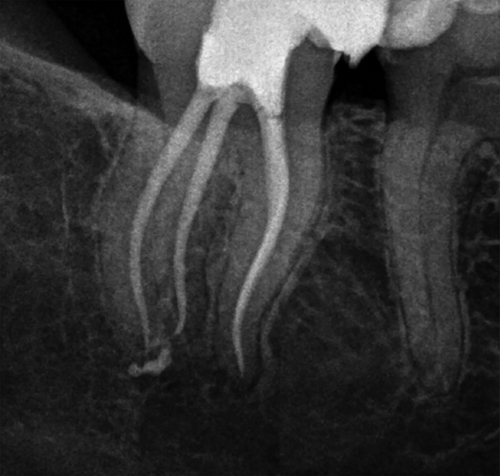
The clinical benefits are particularly evident in challenging cases. The smaller tip facilitates scouting and enlargement of calcified canals and difficult-to-locate anatomy such as MB2 canals, while the .09 taper provides effective coronal enlargement when needed. Clinicians can further enhance shaping efficiency through brushing motions and anticurvature filing techniques while maintaining a minimally invasive philosophy.
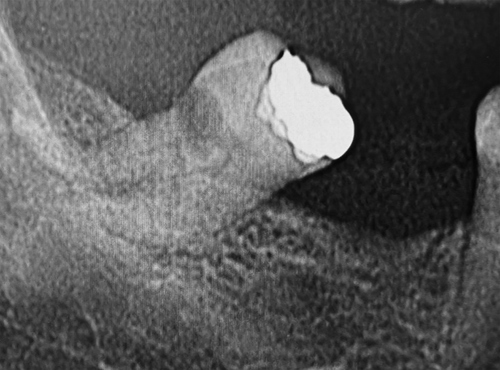
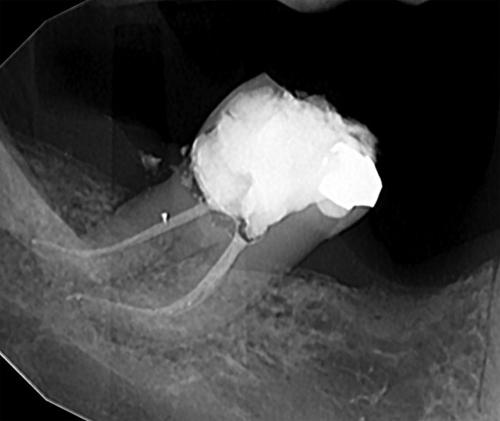
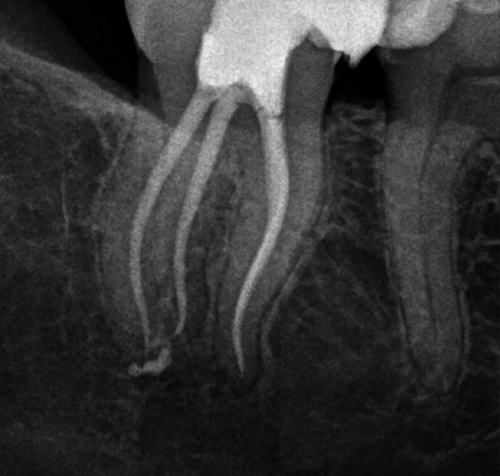
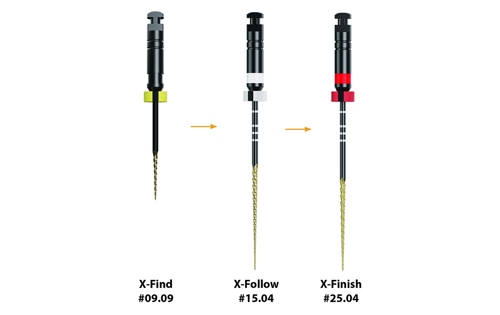
The clinical cases shown in Figures 2 and 3 highlight the ability of the EdgeOnyx™ system to effectively manage complex canal anatomies. The complete instrumentation sequence used in these cases—09.09, 15.04, and 25.04—is presented in Figure 4. The proprietary heat treatment provides exceptional flexibility, strength, and reduced shape-memory effects, resulting in less bounce-back during instrumentation. This characteristic helps maintain the original canal trajectory, particularly in severe apical curvatures and double-curved canals where preserving anatomy is critical.
By facilitating safer, more predictable preflaring and reducing the mechanical burden on subsequent shaping instruments, the EdgeOnyx system aligns well with crown-down instrumentation principles. For general practitioners and specialists alike, this innovative approach offers a practical solution for managing challenging canal anatomies while promoting efficient, conservative, and predictable endodontic treatment.