Building a Predictable Endodontic Workflow
How the Right Armamentarium Drives Consistency and Success

Predictability is one of the defining characteristics of successful endodontic treatment. Although every case presents unique anatomical challenges, establishing a standardized workflow allows clinicians to deliver efficient, reproducible care while minimizing unnecessary variability. Over nearly a decade in practice, I have refined a protocol that emphasizes consistency from access through final shaping. By combining the EdgeApex Handpiece with the EdgeFile X7 and V-Taper HT systems, I have developed a workflow that is dependable across a wide range of clinical situations and adaptable when anatomy requires modification.
My sequence remains essentially unchanged in more than 90% of cases. Following access preparation and identification of the canal orifices, I begin with the 17/.06 EdgeFile X7 to enlarge the coronal portion of the canal and improve straight-line access. Coronal enlargement facilitates subsequent instrumentation while reducing stress on the smaller files introduced later in the procedure.
The next step is establishing a glide path with the 14/.03 V-Taper HT file. Creating a reproducible glide path promotes smoother progression through the canal system and provides a reliable foundation for subsequent shaping. Maintaining the same sequence from case to case allows me to focus on the anatomy rather than continually adjusting my instrumentation protocol.
One feature that has significantly improved my efficiency for this workflow is the integrated apex locator within the EdgeApex Wireless Handpiece. Rather than relying on a separate unit, working length determination becomes part of the instrumentation process. The handpiece can be programmed to automatically reverse when the file reaches the anatomical minor constriction, helping maintain working length while reducing interruptions. Audible feedback further enhances workflow because it allows attention to remain on the operating field instead of repeatedly checking a display.
The wireless, lightweight design also contributes to ergonomics during treatment. Access is comfortable in both routine cases and more challenging ones. In addition, the ability to program multiple memory settings makes transitions between different file systems seamless by preserving preferred speed and torque parameters.
After glide path preparation, I typically shape the canals using the 17/.04 EdgeFile X7 followed by the 25/.04 EdgeFile X7. Because my practice routinely incorporates enhanced irrigation protocols, including GentleWave and EdgePRO Laser, a majority of cases are completed at a 25/.04 preparation. When canal anatomy indicates a larger apical size, the preparation is expanded accordingly. The protocol remains flexible enough to accommodate anatomical variation while preserving a consistent overall sequence.
The greatest advantage of a standardized workflow is not simply efficiency but reproducibility and in a way autonomy, which the EdgeApex Handpiece overwhelmingly provides. Repeating the same sequence across a broad range of cases creates familiarity with instrument behavior and simplifies clinical decision-making. As a result, attention can remain focused on diagnosis, and canal anatomy rather than the mechanics of instrumentation.
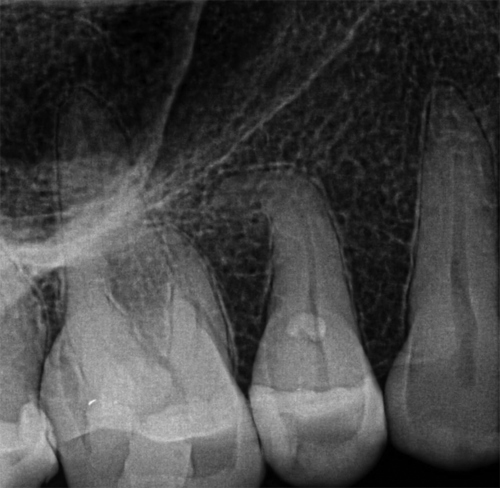
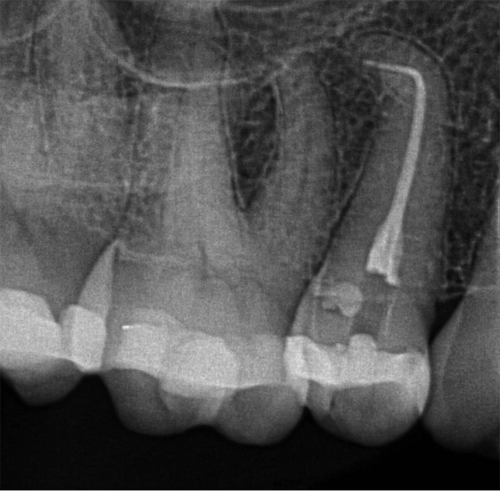
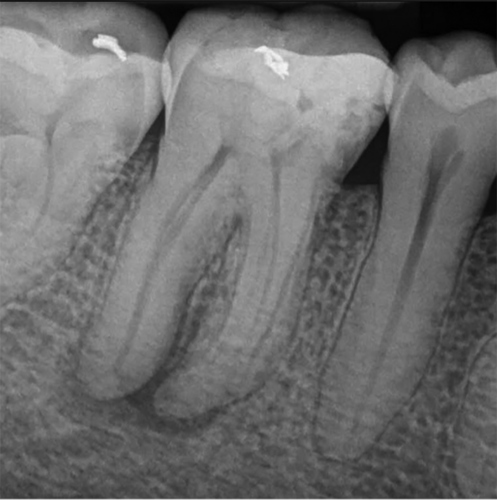
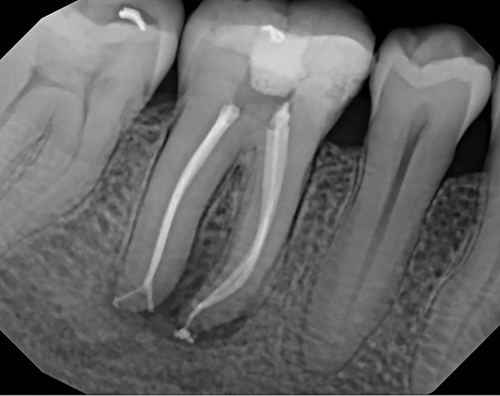
My clinical outcomes have remained remarkably consistent throughout the evolution of this protocol. Figures 1 and 2 demonstrate cases completed during residency training, while Figures 3 and 4 represent recent treatments performed after years of clinical refinement. Although technology has advanced during that period, the underlying philosophy has remained unchanged: develop a dependable workflow, follow it consistently, and modify it only when clinical anatomy requires. Recent advances in instrumentation have streamlined that workflow even further, improving efficiency without compromising predictability. For clinicians seeking reliable, repeatable endodontic treatment, a disciplined and standardized approach continues to be one of the most valuable tools in everyday practice.
An additional benefit of following a consistent protocol is communication within the practice. Because each member of the clinical team understands the sequence of instrumentation, treatment flows more efficiently and instrument preparation becomes more predictable. Standardization also shortens the learning curve when incorporating new technologies, since each innovation can be evaluated within an established workflow instead of requiring a complete change in technique. Ultimately, technology should support sound clinical principles rather than replace them. By building a repeatable protocol around careful diagnosis, thoughtful instrumentation, and effective irrigation, clinicians can achieve outcomes that are both efficient and consistent for patients.