Leadership through listening
Incoming ADA President Thomas M. Paumier, D.D.S., says the profession’s greatest strength lies in collaboration, core activities and a strong tripartite

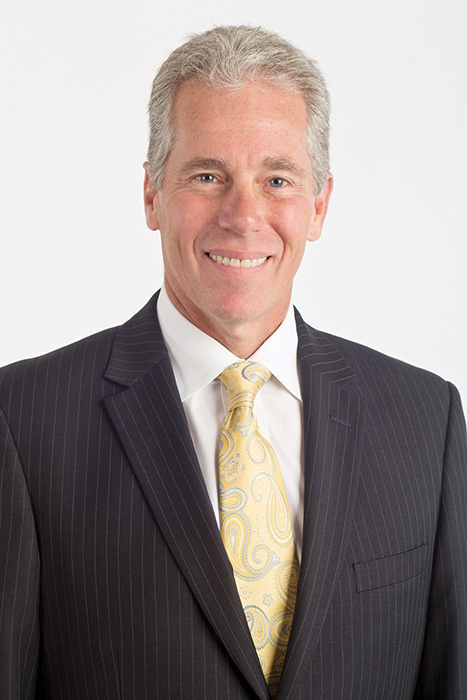
Thomas M. Paumier, D.D.S. has acquired a lengthy list of professional achievements and prestigious titles during his nearly four decades in practice, yet he modestly credits those accomplishments to the strength of a high-performing team, and firmly believes the ADA has been an irreplaceable partner throughout his career.
As he prepares to assume the role of ADA president in October, Dr. Paumier said, “I don’t care if they ever remember my name. All I want to be is a small piece of the puzzle that helps us move forward as a profession.”
Dr. Paumier believes in the power of listening and being part of teams where members collaborate, ask questions, and are willing to change their minds.
But there is one thing he won’t change—his core values.
“Core values are the foundation. Stay true to them,” he advises.
Purpose and balance
Like many dentists, family connections started Dr. Paumier on his career path at an early age. Growing up in Ohio, he admired an uncle who was a general surgeon and a cousin who practiced gastroenterology. However, he also noticed the demands of their jobs as they often arrived late or left early from family events to care for patients. Dr. Paumier knew he wanted a career in healthcare that allowed for professional and personal balance.
His introduction to dentistry came through his mother who came home from work as a dental assistant filled with energy, excited to share stories of helping restore smiles and improve patients’ lives. He earned his D.D.S. from The Ohio State University College of Dentistry, and after a general practice residency at St. Elizabeth Hospital Medical Center in Youngstown, Ohio, he began working as a general dentist in his hometown of Canton, Ohio.
Dr. Paumier credits multiple mentors with helping him grow as a clinician and a leader. But he points to one individual who fundamentally shaped his path in organized dentistry. Fellow Canton-based practitioner James Fanno, D.D.S., a past president of the Ohio Dental Association and former ADA Speaker of the House, invited Dr. Paumier to lunch, handed him a membership application and imparted to him the importance of organized dentistry.
That lesson about the importance of the tripartite still informs Dr. Paumier’s priorities today. He views the ADA and organized dentistry as stalwart supports for the profession. Creating standards for dental materials, products and technologies or developing CDT codes to allow uniform communication with insurance companies are easy to take for granted, but without them, providing safe and effective treatment to patients would be far more difficult.
“The ADA is the infrastructure for the profession,” he said. “The ADA does all of those things, and it doesn’t matter in what setting you practice all of those things are relevant to you.”
Getting dentists to understand and appreciate the value of a strong and effective ADA is a challenge Dr. Paumier readily acknowledges. Organized dentistry has been an important ally throughout his career, and he wants to ensure it remains a partner for future generations of dentists.
Having an organized impact
Behind the scenes work from the ADA and the tripartite remains critical to every practicing dentist, but Dr. Paumier also knows firsthand how actively engaging at every level of the tripartite can bring about professional and personal growth. Today he is recognized as an expert in antibiotic stewardship, and he credits organized dentistry with helping him attain that distinction.
As an undergraduate, he studied microbiology and was interested in the growing body of research connecting oral health with medicine. After becoming a dentist, this interest led to him collaborating with physicians by providing dental clearances for patients preparing to undergo cardiac valve surgery.
This work kept him on top of evolving evidence around antibiotic use. He noticed a dental guideline for antibiotic prophylaxis for patients with prosthetic joints didn’t seem to adhere to the latest research, and reached out to the ADA to voice his concerns. He was surprised and eager when he was invited to help develop a clinical practice guideline to advise dentists about prophylactic antibiotic use when treating patients with prosthetic joints.
Despite not working in research or academia, his voice was heard, and he has stayed involved with updating antibiotic guidelines and developing best practices throughout his career.
“As a practicing clinician with no advanced degrees, it is only because of my involvement in organized dentistry that I have had the opportunity to get that education and then actually become an expert in the field of antibiotic stewardship and appropriate antibiotic use.”
A culture of listening
Like many dentists, Dr. Paumier said running his dental practice taught him to be a leader. He believes having skilled people with the requisite training is key to any successful endeavor.
The leader is responsible for providing a clear direction and offering a high level of trust in, and support for, each individual team member. Dr. Paumier said he intends to bring the same approach to his term as ADA president.
“It’s about having a vision and a direction that everyone can follow and understand,” he said. Dr. Paumier believes that the next crucial step is to develop a new, better mechanism for strategic planning, and it must be a collaborative effort involving the House of Delegates, the Board of Trustees, state and local executive directors, volunteer leaders and the ADA professional team working together absent any predetermined outcomes.
Whether he is leading the staff at his practice, serving as chairman of the Cleveland Clinic Mercy Hospital board, mentoring residents in the hospital’s general practice residency program, or serving in a leadership position with his local, state or national dental association, Dr. Paumier said the most important thing he can do is actively listen.
“The worst decisions are made when everyone has the same lens to look through, and don’t challenge each other,” he said.
Dr. Paumier said he knows working with the tripartite structure of the ADA, state associations and local dental societies means there are a lot of voices to pay attention to. Every state and local association faces unique challenges.
Optimism in the next generation
Dr. Paumier acknowledges the many headwinds facing dentistry. He points to educational debt, varying clinical experiences among graduates, insurance pressures and threats to the doctor-patient relationship as significant concerns. While some of those challenges are likely to be felt most acutely by early career dentists, Dr. Paumier is inspired by working with this next generation of clinicians.
“It makes me want to work harder to make sure that they have every opportunity that I had,” he said.
For Dr. Paumier that inspiration transforms into optimism. He believes the ADA and organized dentistry are in position to help overcome the challenges dentists face. The first hurdle is making sure every dentist is aware of the wealth of resources they have available through the tripartite, as well appreciate the behind the scenes work organized dentistry does on their behalf.
Strengthening the ADA
As he prepares to begin his term as ADA president, Dr. Paumier is aware that the association is in a transitional period, and one of his responsibilities will be to help bring focus to its future. The ADA is currently undertaking a Governance and Organizational Health Evaluation which is scheduled to conclude with recommendations for change sent to the Board in January 2027. The Board will evaluate these and bring forth resolutions to the House of Delegates for recommendations under its purview as Dr. Paumier concludes his term. He knows that whatever the recommendations are, they are likely to define his year as president.
He believes the ADA should remain focused on core activities such as advocacy, science, standards, ethics, and providing practical information and resources to empower dentists thereby helping improve the health of the public. Still, he approaches the Governance and Organizational Health Evaluation with an open mind, and, as always, is prepared to begin with listening and questions.
“We have to prioritize the things that only the ADA can do,” he said. “At the ADA, if we can’t be best in class, best in price, and best in service, then we should be collaborating with those who can, and hopefully that’s in most cases our state partners.”
He also sees this transitional time for the ADA as an opportunity to strengthen state and local dental associations along with the connections between them. This is important for bringing new dentists into the world of organized dentistry as most members first engage with their component or state level association.
“We are that infrastructure for the entire profession, but also for the tripartite,” he said. “We have to ensure that the tripartite stays strong.”
Looking ahead
What excites Dr. Paumier about dentistry’s future is the growing understanding of the relationship between oral health and overall health. Dentistry has an opportunity to help shape that future, while working with policymakers to ensure oral health is recognized as an integral part of healthcare.
Ultimately, he hopes his presidency will be remembered less for any individual accomplishment than for helping strengthen the profession itself. The message he most hopes dentists take away is one he has repeated for years.
“When you’re a member of organized dentistry, you never practice alone,” he said. “The ADA is there at every stage of your career to have your back and to help you through the hard times.”