ADA raises concerns about proposed accreditation rule changes
Association urges Education Department to consider effects on dental education, workforce
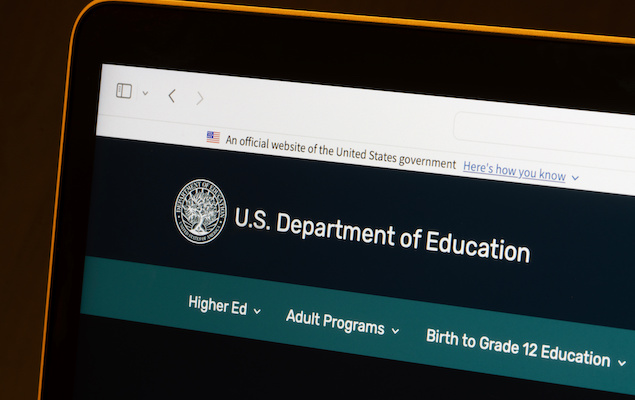
The ADA is raising concerns about proposed changes to federal regulations governing the recognition of accrediting agencies, citing potential effects on dental education, the oral health workforce and access to care.
In a Sept. 21 letter to the U.S. Department of Education, the ADA commented on a proposed rule to overhaul existing accrediting agency recognition regulations.
According to the letter, the proposed regulations could have consequences for students, workforce development, public oral health and patient safety.
The ADA said dentistry already faces workforce challenges in many communities. Although the overall U.S. dentist workforce is growing, that growth is not evenly distributed, and the gap in dentist supply between urban and rural counties has been increasing for two decades, according to the letter.
“Any regulatory changes that create uncertainty in the educational pipeline or delay the graduation or licensure of future practitioners risk exacerbating these existing workforce shortages and reducing access to essential oral health services,” reads the letter, which was signed by ADA President Richard Rosato, D.M.D., and Executive Director Nader Nadershahi, D.D.S., M.B.A., Ed.D.
The ADA highlighted the role of the Commission on Dental Accreditation, which the Department has long recognized as the sole agency to accredit dental schools, advanced dental education programs, and allied dental programs. Current regulations require that students can only use federal financial assistance to attend educational institutions that are accredited by Education Department-recognized accreditors.
According to the ADA, CODA accreditation provides a link to federal programs supporting students, educational institutions and workforce development. The letter noted that CODA accreditation is an eligibility requirement for the Ryan White HIV/AIDS grant program.
The ADA said actions jeopardizing access to such funding could discourage students from pursuing dental careers. According to the letter, that concern could be compounded by the elimination of the Grad PLUS loan program and a new $50,000 annual borrowing limit for dental students that took effect July 1.
The Association also raised concerns about potential effects on advanced dental education and specialty training, noting that CODA accredits numerous advanced education programs.
The ADA specifically objected to a proposed change involving the makeup of accreditation standard-setting bodies. According to the letter, subject-matter expertise is necessary to develop standards involving complex clinical experiences.
“A change to the regulations that prohibits subject matter experts from voting on standards and expects public members to make these decisions may have grave consequences for individual patient outcomes as well as public trust in the dental profession and those training its next generation,” the ADA wrote.
The Association expressed further concern about the proposal to prohibit trade associations from working with programmatic accreditors. According to the letter, CODA’s board includes 33 appointees from 19 professional organizations as well as state dental boards, a student and four members of the public. The ADA appoints four of the 33 members.
“No single stakeholder, ADA included, drives decisions on programmatic quality and integrity,” the Association wrote.
If the Department proceeds with the proposed changes, the ADA urged it to adopt a comprehensive, multiyear transition framework that would allow continuous recognition while successor entities are established and pursue Department recognition.
According to the letter, state practice acts in nearly all 50 states, the District of Columbia and five U.S. territories currently name CODA and/or the ADA and condition licensure on graduation from a program accredited by CODA and/or the ADA.
The ADA said detailed implementation plans accounting for those requirements would be crucial.
“The proposed rule does not do that yet,” the Association wrote.
The ADA concluded by offering to work with the Department on a proposal that addresses accreditor independence while considering potential consequences for students, dental education programs, the dental profession and the public.